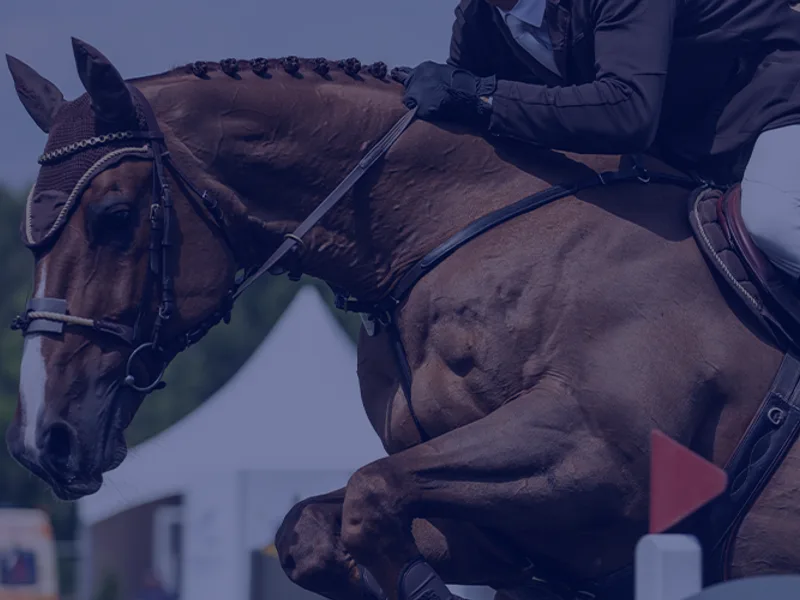
Equine physiotherapy helps horses move freely and work comfortably, whether they're competing, hacking out or enjoying retirement. We come to your yard, assess how your horse moves, and work as part of your horse's team with your vet, farrier, saddle fitter and trainer.
When to consider physio for your horse
- Back pain and stiffness, including rehab after a vet's diagnosis
- Changes in performance: resistance, rushing, losing rhythm or struggling with a movement
- Rehab after injury to muscles, tendons or ligaments, following your vet's plan
- Arthritis and stiffness in older horses
- Uneven muscle development or a weak topline
- Regular maintenance for sport and working horses
Signs your horse may be in pain
Many "behaviour problems" under saddle turn out to be pain. Researchers listed 24 behaviours seen in ridden horses, and a horse showing 8 or more is likely to have musculoskeletal pain. Some of them:
- Ears back or flat for 5 seconds or more
- Mouth open, teeth apart, for 10 seconds or more
- Large, repeated tail swishing
- Repeated head tossing
- Reluctance to go forward
- Bucking or rearing
Ridden Horse Pain Ethogram, Dyson et al., 2018. A screening tool for trained assessors, not a diagnosis.
How an equine physio session works
We start with your horse's history, then watch them move in hand (and on the lunge or ridden where appropriate), followed by a hands-on assessment of the back, neck and limbs. Treatment may include manual therapy, laser therapy, electrotherapy and kinesiotaping, followed by an exercise programme: groundwork, in-hand polework and a gradual return to work.
Polework at a glance
Poles are one of the most useful rehab tools for horses. Walk is the most useful pace, because there's no moment of suspension, so every step comes from muscle rather than momentum. Closer spacing encourages shorter, more engaged steps; wider spacing lengthens the stride. Working in-hand lets the horse use its back, and lets you watch how it moves. More on exercise therapy and polework.
Laminitis is an emergency. If you suspect it, call your vet straight away. Exercise isn't appropriate with current or recent laminitis; physio can help with rehab once your vet confirms the feet are stable.
Frequently asked questions
Do you come to the yard?
Yes. We're a mobile practice and treat horses at their own yard, across the Overberg, Somerset West and Stellenbosch.
How often should my horse see a physio?
It depends on your horse's workload, history and goals. After an assessment we'll suggest a schedule, whether that's a short course of rehab or regular maintenance.
Do you work with my vet and saddle fitter?
Yes. Physio works best as part of a team. We liaise with your vet, and we'll flag anything we think your farrier, saddle fitter or dentist should look at.
Where we work
We're a mobile practice, so we come to you. We cover Betty's Bay, Botrivier, Gansbaai, Grabouw, Hermanus, Kleinmond, Pringle Bay, Somerset West, Stanford and Stellenbosch, and the areas around them. See our service area map.
This page is general information, not a diagnosis. Every animal is assessed individually, and we work alongside your vet.